
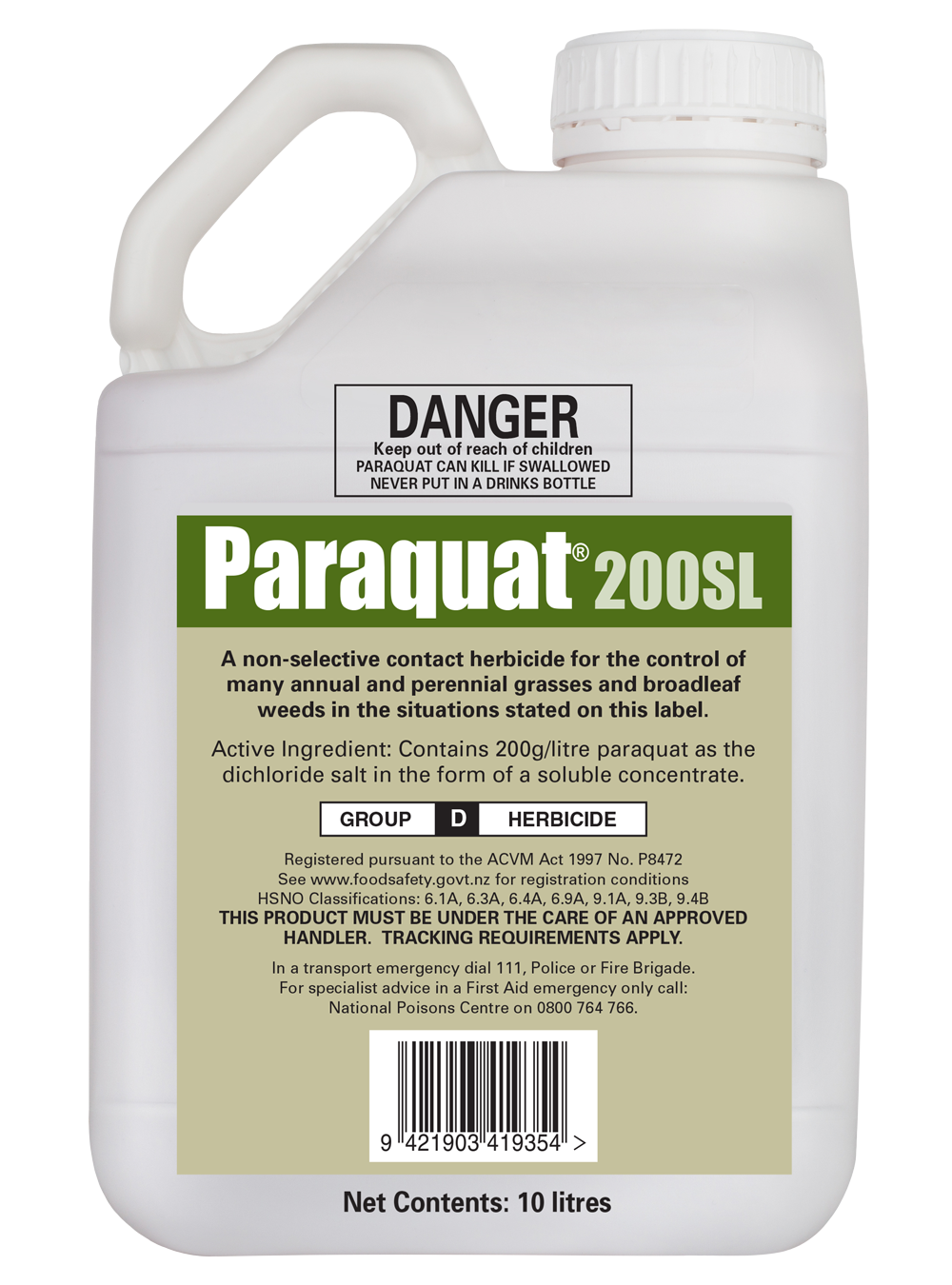

Paraquat Lawsuit

Parkinson's disease risk may rise if one is exposed to weed killers containing paraquat. You could be eligible to pursue a paraquat claim for damages if utilizing these products led to a Parkinson's diagnosis.

We were able to get almost $2 Billion on behalf of families who had suffered from careless companies. Together, let's pursue the justice you are due.

Get a Free Legal Consultation

About the Lawsuit

Paraquat lawsuits are legal actions against the manufacturers and distributors of the herbicide paraquat, alleging that exposure to the chemical causes Parkinson's disease and other neurological disorders.

A chinese owned chemical company has been lying about the dangers of the herbicide Paraquat, which has been found to cause Parkinsons disease.

Why Choose Our Firm?

Experienced Attorneys

We have a proven track record winning Paraquat lawsuits cases and securing fair settlements for our clients.

Personalized Support

Your case matters to us. We provide dedicated support every step of the way to ensure you feel heard and helped.

No Fees Unless You Win

We work on a contingency basis, meaning you don’t pay unless we win compensation for you.

Frequently Asked Questions

Between 2000 and 2016, there were 17 deaths – three involving children – caused by accidental ingestion of paraquat. These cases resulted from the pesticide being illegally transferred to beverage containers and later mistaken for a drink and consumed. A single sip can be fatal. In addition to the deaths by accidental ingestion, during the same time period there were three deaths and many severe injuries caused by the pesticide getting onto the skin or into the eyes of those working with the herbicide. To prevent these tragedies, in 2016 EPA required several risk mitigation measures intended to prevent accidental ingestion of paraquat. One of the risk mitigation measures imposed in 2016 was a requirement for certified applicators who use paraquat to complete paraquat-specific training once every three years. The paraquat training reinforces that paraquat must not be transferred to or stored in improper containers and provides important information about paraquat’s toxicity, label requirements, and the dangers of misuse. Thankfully, there have been no paraquat fatality reports received by EPA since the implementation of the 2016 mitigation measures.

Any person who intends to use paraquat must be a certified applicator and is required to take the paraquat training. “Use” includes pre-application activities involving mixing and loading the pesticide; applying the pesticide; and other pesticide-related activities, including, but not limited to, transporting or storing opened pesticide containers, cleaning equipment, and disposing of excess pesticides, spray mix, equipment wash waters, pesticide containers, and other paraquat-containing materials.

The use of paraquat, which is a restricted use pesticide, is restricted to certified pesticide applicators only; noncertified persons working under the supervision of a certified applicator are prohibited from using paraquat, including mixing, loading, applying the pesticide, and other pesticide-related activities.

To use paraquat products, you must be a certified applicator and you must take the paraquat-specific training. All paraquat labels include a link to the training. The training provides important information about paraquat’s toxicity, new label requirements and restrictions, and the consequences of misuse. The training must be retaken every three years. Although this training is a paraquat label requirement, a state may choose to approve it for continuing education. For state-specific requirements, contact your state lead pesticide agency.

Parkinson's disease linked to the herbicide Paraquat

One weed-killing ingredient included in many commercial herbicide formulations is paraquat. Thousands of others, however, have sued, claiming that paraquat exposure is to blame for their Parkinson's illness.

According to the National Institutes of Health (NIH), paraquat users were shown to be 2.5 times more likely to acquire Parkinson's disease in one research.

Regular and sustained exposure to paraquat may put commercial farmers and agricultural workers at the highest risk of acquiring Parkinson's disease.

Despite the fact that several nations, like the UK, Switzerland, and China, have banned paraquat products because of their high levels of toxicity, paraquat usage is still widespread in the United States.

We have fought for those who have been hurt without their fault for more than 25 years.

Get in touch with us right away if you or a loved one worked with or near this chemical and are currently suffering from Parkinson's. You might be able to file a paraquat lawsuit and get paid.

Herbicide Paraquat Linked to Parkinson’s Disease
Products Containing Paraquat

Products Containing Paraquat

Many herbicides marketed for use in commercial agriculture contain paraquat dichloride, also known as paraquat.

A few products that contain paraquat include:

  • Blanco®
  • Bonedry®
  • Cyclone™ SL 2.0
  • Devour™
  • Firestorm®
  • Gramoxone® SL 3.0
  • Helmquat 3SL
  • Para-Shot 3.0
  • Parazone 3SL
  • Quit-Quak™
  • Willowood Paraquat 3SL

When weeds start to grow resistant to glyphosate-containing treatments like Roundup, paraquat compounds are frequently employed.

Who Can File a Paraquat Lawsuit?

A paraquat lawsuit could be possible for you to pursue if you or a loved one was

  • Exposed to a paraquat-containing pesticide
  • Identified as having multiple system atrophy, Parkinson's disease, or progressive supranuclear palsy as a consequence

You might be eligible to bring a wrongful death case on behalf of your loved one, even if they have already gone away from Parkinson's disease.

A free, no-obligation consultation will allow you to determine whether you are eligible for a paraquat case.

The Paraquat Parkinson's Lawsuit Process

Our goal is to simplify the paraquat Parkinson lawsuit procedure for you. So that you can concentrate on your health and spending time with your family, let us take care of the legal paperwork.

  • In a complimentary consultation, find out if you are qualified to submit a claim.
  • To create a compelling case, gather evidence such as medical records and exposure documentation.
  • Before any deadlines, submit your paraquat lawsuit for Parkinson's disease.
  • Discuss settlement sums for the paraquat litigation with the defendants.
  • If a settlement cannot be reached, present your case in court during a trial.

A paraquat lawsuit's settlement might assist with covering other costs such as lost income from missed work, medical bills, and other costs.

How to File a Paraquat Parkinson’s Lawsuit background image